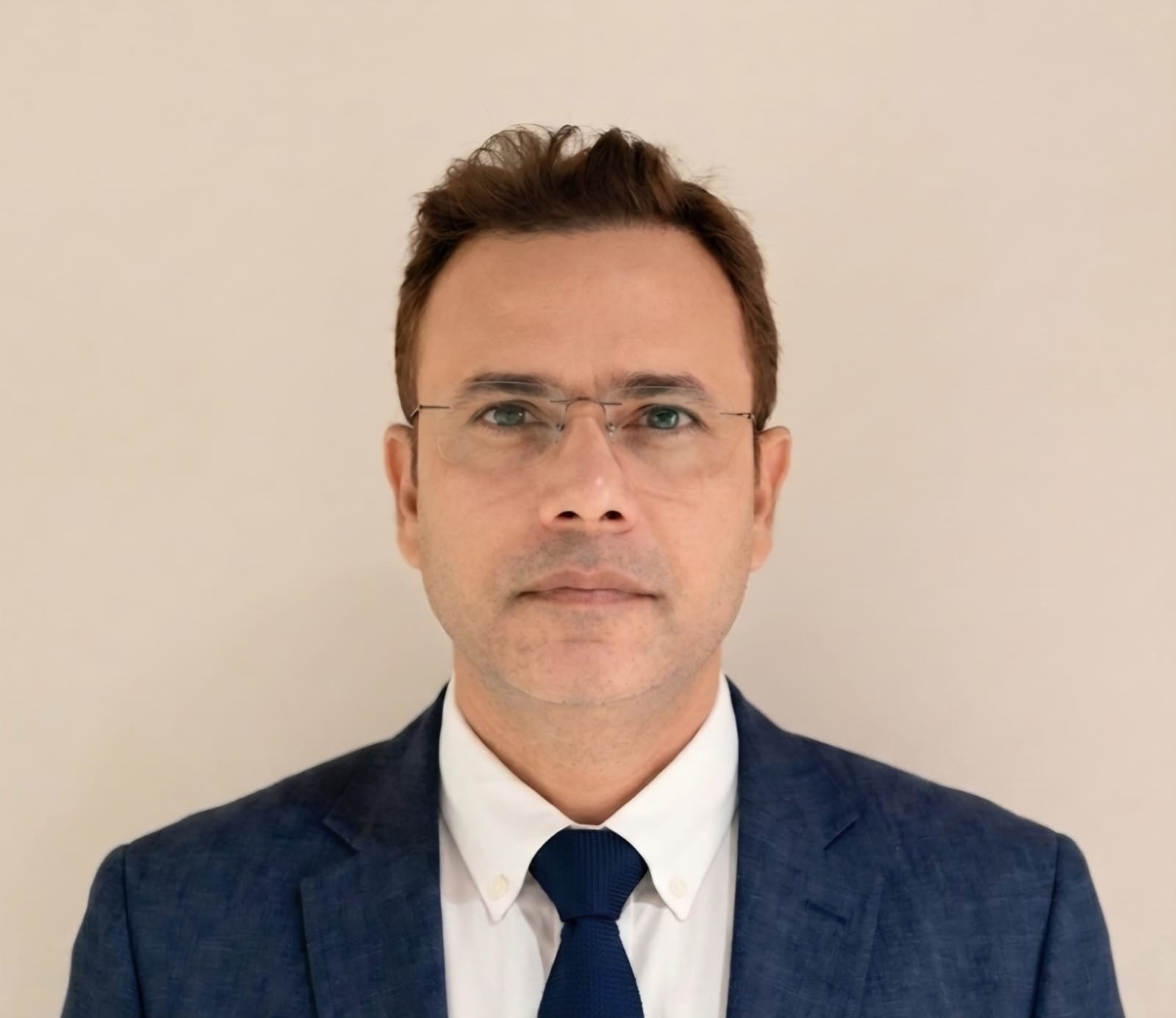
S Rehan Ahmad, PhD, FRSB (London)

S Rehan Ahmad, PhD, FRSB (London)

B.Ed. (University of Calcutta), Double M.Sc. (Zoology & Microbiology), PhD (Microbiology)
Current Official Address:

Department of Microbiology, & Zoology , H M M College for Women, West Bengal State University, Government of West Bengal, 700035, India

Research Highlights & Recent Publications

Research Interests

View Details

Our research explores medicinal plant compounds for treating diseases like neurodegeneration and cancer. We combine CRISPR-Cas9 gene therapy with cell line techniques to enhance these natural bioactive compounds, developing targeted treatments that leverage their antioxidant,...

Natural Products as Modulators of Neurodegeneration
Genetic and Molecular Basis of Neurodegenerative Disorders
Cognitive Neuropsychology and Stress–Microbiome–Brain Interactions

Recent Publications

View All Publications
Q1 PAPER

Neuropathology and Applied Neurobiology ;IF-3.4; Q1

Neuropathology and Applied Neurobiology, 53
Dec 21, 2025 onlinelibrary.wiley.com
View Details
Q1 PAPER

ACS Chemical Neuroscience; IF- 4 ; Q1

ACS Chemical Neuroscience, 16
Dec 21, 2025 pubs.acs.org
View Details
Q1 PAPER

Proteins: Structure, Function, and Bioinformatics; IF-2.8 ; Q1

Proteins: Structure, Function, and Bioinformatics, 93
Dec 21, 2025 onlinelibrary.wiley.com
View Details

Professional Summary

Education: B.Sc., B.Ed., M.Sc. (Zoology & Microbiology), PhD (Microbiology)

Academic and Research Experience: 20+ years

Areas of Research Expertise: Microbiology, Neurodegenerative Diseases, Cognitive Neuroscience, Medicinal Chemistry, Clinical Genetics, Pharmaceutical Microbiology, Bioinformatics, Precision Medicine, Gynecological Cancer, Health Sciences, Nursing, Drug Discovery, and Pharmacy.

Publications: 70 publications, including journals ranked Q1 (8), Q2 (12), Q3 (5), and Q4 (40); the remaining publications are peer-reviewed.

Patents: 45 total (26 granted, 19 under examination)

Projects: 7 research projects funded by national and international agencies

International Collaboration: Ongoing project, Saudi Arabia, Australia, and Malaysia

Head of Department: Zoology & Microbiology, HMMCW, Government of West Bengal, India (April 2024–Present)

Convenor: Intellectual Property Rights (IPR) Cell, HMMCW, Government of West Bengal, India (January 2021–Present)

Vice-President: Institution’s Innovation Council (IIC), Ministry of Education, Government of India
(2022 – Present)

Coordinator: Unnat Bharat Abhiyan (UBA), Government of India (2022 – Present)

Coordinator, Study Centre–28166: Indira Gandhi National Open University (IGNOU), New Delhi, India ( Sep. 2023 -Present)

Centre Superintendent: Indira Gandhi National Open University (IGNOU), New Delhi, India (April, 2024 – Present)

Academic Qualification

PhD
Shri Venkateshwara University, India
2011-2016
Certificate Protected
M.Sc. (Microbiology)
Periyar University (Distance learning), India
2009-2015
Certificate Protected
B.Ed.
University of Calcutta, West Bengal, India
2004-2005
Certificate Protected
M.Sc. (Zoology)
Vinoba Bhave University, Jharkhand ,India
2001-2003
Certificate Protected

Professional Qualification

Industrial Biotechnology
University of Manchester, United Kingdom
2022
Certificate Protected
Bioethics: The Law, Medicine, and Ethics of Reproductive Technologies and Genetics
Harvard University, USA
2022
Certificate Protected
Bioinformatics
University of California, San Diego, USA
2024
Certificate Protected
Post-Graduate Diploma in Educational Management and Administration (PGDEMA)
Indira Gandhi National Open University
2016
Certificate Protected
Post-Graduate Diploma in Intellectual Property Rights (PGDIPR)
Indira Gandhi National Open University
2023
Certificate Protected

Academic Experience

Assistant Professor & HOD (Microbiology & Zoology)
11/2019 - Present
H M M College for Women, West Bengal State University, Kolkata, West Bengal, India
Visiting Faculty (Hybrid)
06/2024 - Present
Department of Biotechnology, UCSI University, Kuala Lumpur, Malaysia,
Assistant Professor / Approved Academic Counselor
01/2017 - 10/2019
Indira Gandhi National Open University, New Delhi, India

Editorial Experience

Academic Editor
06/2023 - Present
PLOS One , San Francisco, CA 94103 , United States
Guest Editor
06/2024 - Present
JoVE
Elsevier - Book Editor
03/2025 - Present
Precision Medicine in Neurodegenerative Diseases: From Research to Clinical Practice (ISBN eBook 9780443430121)
Elsevier - Book Editor
06/2024 - Present
The Gut Microbiome in Precision Medicine: From Research to Clinical Practice. (ISBN eBook 9780443404849)
Joint Editor
2016 - Present
Scotopia (A Journal run by the Government of West Bengal’s Institution)

Administrator / Managerial Experience

Coordinator, IGNOU Centre (28166)
10/2023 - Present
Indira Gandhi National Open University, New Delhi, India
Centre Superintendent (CS)
04/2021 - Present
Indira Gandhi National Open University (IGNOU)
Vice-President
08/2022 - Present
Institution's Innovation Council (IIC), Ministry of Education (MoE), Government of India

Research Interest

My Research Work

My research integrates neuropharmacology, molecular genetics, and cognitive neuropsychology to elucidate mechanisms of neurodegenerative disorders, cancer, and stress-related pathologies. Adopting a systems biology approach, I investigate natural bioactive metabolites, microbiome–gut–brain axis interactions, genetic variants, and psychosocial modifiers, aiming to translate mechanistic insights into preventive and precision therapeutic interventions.

Natural Products as Modulators of Neurodegeneration

My research focuses on the extraction, isolation, structural characterization, and pharmacological evaluation of phytochemicals from medicinal plants. Utilizing in vitro biochemical assays, in silico molecular docking, molecular dynamics simulations, and cell-based models, I characterize their multimodal activities, including antimicrobial (against Gram-positive/negative pathogens), antioxidant, anti-inflammatory, anticancer, anti-aggregative (e.g., inhibition of tau and amyloid-β fibrillization), and neuroprotective effects. These properties position such compounds as promising multitarget leads for Alzheimer’s disease and tauopathies, addressing oxidative stress, neuroinflammation, protein misfolding, and aggregation—key hallmarks of neurodegeneration.

This work aligns with emerging evidence that phytochemicals exert broad-spectrum protective effects through interconnected mechanisms, such as radical scavenging, modulation of inflammatory pathways (e.g., NF-κB suppression), enhancement of mitochondrial function, and direct interference with pathogenic protein aggregation.

Genetic and Molecular Basis of Neurodegenerative Disorders

I investigate pathogenic variants in key genes (e.g., TRIM74, MARK4) that induce protein misfolding, proteotoxic stress, synaptic impairment, and neuronal loss. Integrating whole-exome sequencing, structural bioinformatics, molecular dynamics, and functional assays, my studies delineate genotype–phenotype correlations and support targeted precision medicine strategies for complex neurological conditions.

Cognitive Neuropsychology and Stress–Microbiome–Brain Interactions

Current efforts examine how psychosocial stress (e.g., academic pressure), early-life events (e.g., pubertal timing), and microbiome dynamics modulate cognitive trajectories, mental health, and susceptibility to neurodegeneration across the lifespan. This multidisciplinary framework identifies modifiable risk/resilience factors to guide evidence-based prevention and public health interventions.

Skills & Techniques

Molecular & Cellular Biology Techniques
Cell culture, primary neuronal culture, and tissue culture; Staining techniques (immunofluorescence, immunohistochemistry, histological staining); Microscopy: Confocal, fluorescence, light & compound, phase-contrast; Protein analysis: Western blotting, immunoprecipitation, ELISA, enzymatic assays; Nucleic acid techniques: RNA/DNA extraction, reverse transcription, PCR (qPCR/RT-qPCR), DNA purification, gel electrophoresis & quantification; Blotting: Southern, Northern, Western; Pulse-chase labeling and metabolic studies; Flow cytometry and cell sorting.
Neuropharmacology & Functional Assays
In vitro pharmacological assays (receptor binding, dose-response, enzyme inhibition); Neurotoxicity, neuroprotection, and cell viability assays (MTT, LDH, caspase activity); Calcium imaging and electrophysiological recordings (patch-clamp basics); Behavioural pharmacology in animal models (optional extension for translational work); High-throughput screening and compound library evaluation
Molecular Genetics & Genomics
Whole-exome sequencing (WES) and variant analysis; Variant interpretation and pathogenicity assessment (ACMG guidelines); Genetic variant modeling (e.g., TRIM74, MARK4 pathogenic variants); CRISPR/Cas9 gene editing and functional validation; Genotyping and haplotype analysis; Epigenetic assays (DNA methylation, ChIP)
Structural Bioinformatics & Computational Drug Discovery
Molecular docking (AutoDock, PyRx); Molecular dynamics simulations (GROMACS, AMBER); Protein structure visualization & analysis (PyMOL, Swiss-PDB Viewer/SPDBV, Chimera); Homology modeling and structural bioinformatics; Virtual screening and pharmacophore modelling; Systems biology network analysis
Cognitive & Behavioral Neuropsychology Methods
Neuropsychological assessment batteries (e.g., executive function, memory, attention testing); Standardized cognitive testing protocols (e.g., MoCA, MMSE adaptations); Psychosocial & stress-related assessments (questionnaires, scales for anxiety, resilience); Longitudinal cohort studies and statistical analysis of behavioral data; Eye-tracking and reaction time paradigms; Virtual reality (VR) or computer-based cognitive tasks (emerging for stress/microbiome studies)
Analytical & Quantitative Skills
Spectrophotometry, fluorometry, and chromatography (TLC, ion-exchange, HPLC); Data analysis & statistics (R, SPSS, GraphPad Prism); basic Linux/Unix); Image analysis (ImageJ/Fiji, Cell Profiler); Database management & literature mining (PubMed, EndNote/Zotero)
Additional Core Competencies
Scientific writing, grant preparation & manuscript preparation; Ethical research practices (IRB protocols, biosafety); Interdisciplinary collaboration & project management; Critical evaluation of literature & evidence-based interpretation
Core Editorial & Academic Skills
Skilled in evaluating submissions for originality, rigor, and ethics. Experienced in coordinating peer reviewers, ensuring quality reviews, and making balanced editorial decisions. Maintains academic credibility through subject expertise, journal compliance, and publication ethics. Proficient in enhancing manuscript clarity, structure, and formatting consistency. Technical and editorial proficiency includes: EndNote, Mendeley, Zotero (reference management); Turnitin, Plagiarism Checker X (plagiarism detection); IBM SPSS, GraphPad Prism (statistical analysis); and Microsoft Office, WPS, Grammarly, and Google Workspace (document and language refinement tools)

Download CV

Curriculum Vitae — S Rehan Ahmad, PhD, FRSB (London)

Comprehensive academic curriculum vitae including publications, research projects, teaching experience, and awards.

Download CV (PDF)